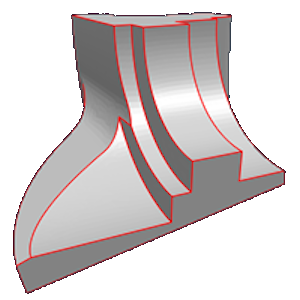
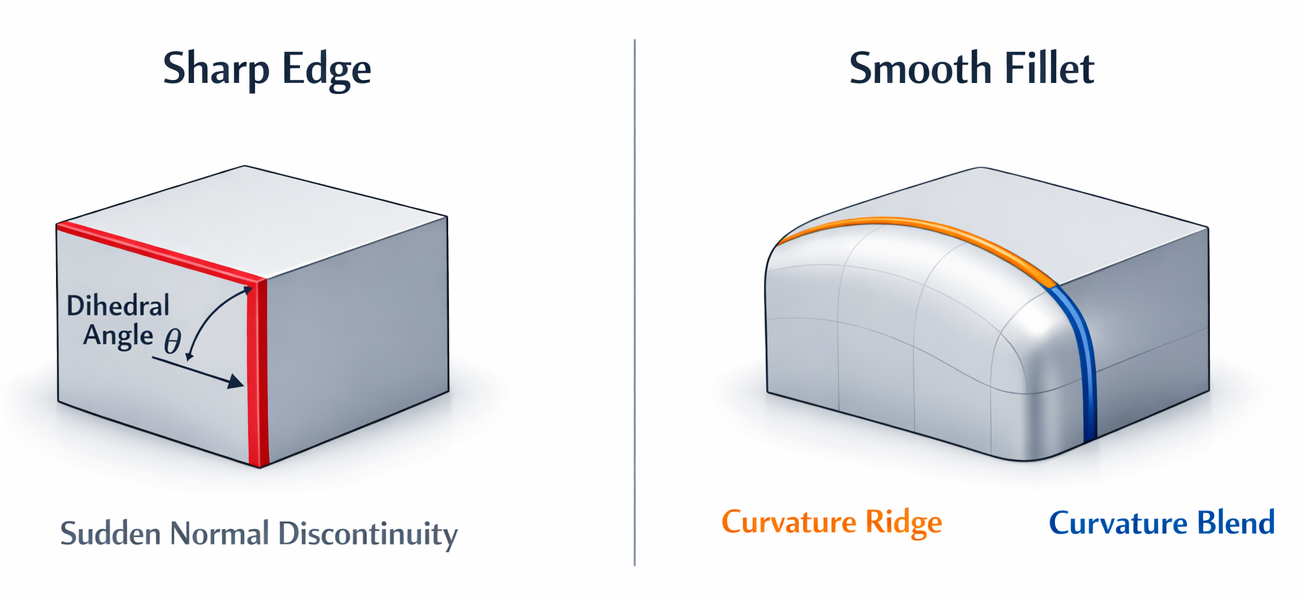
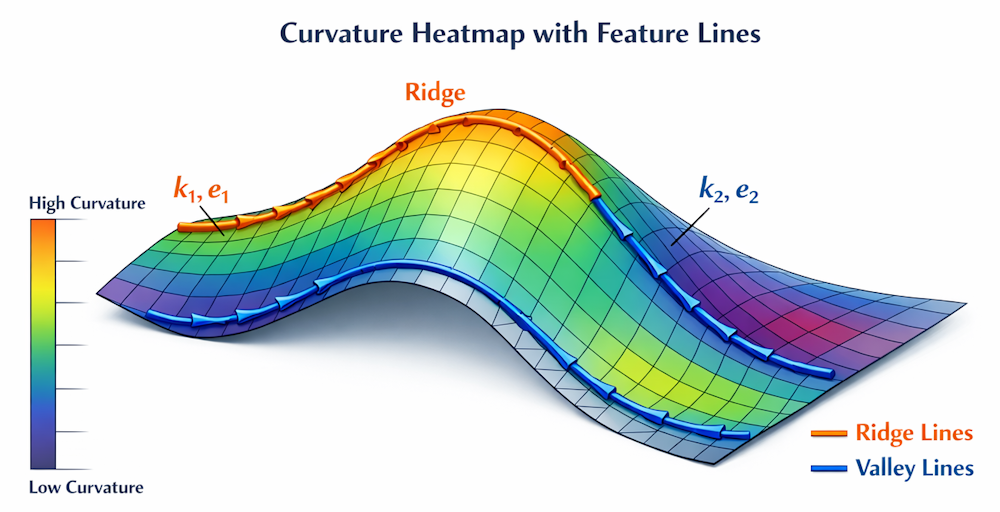
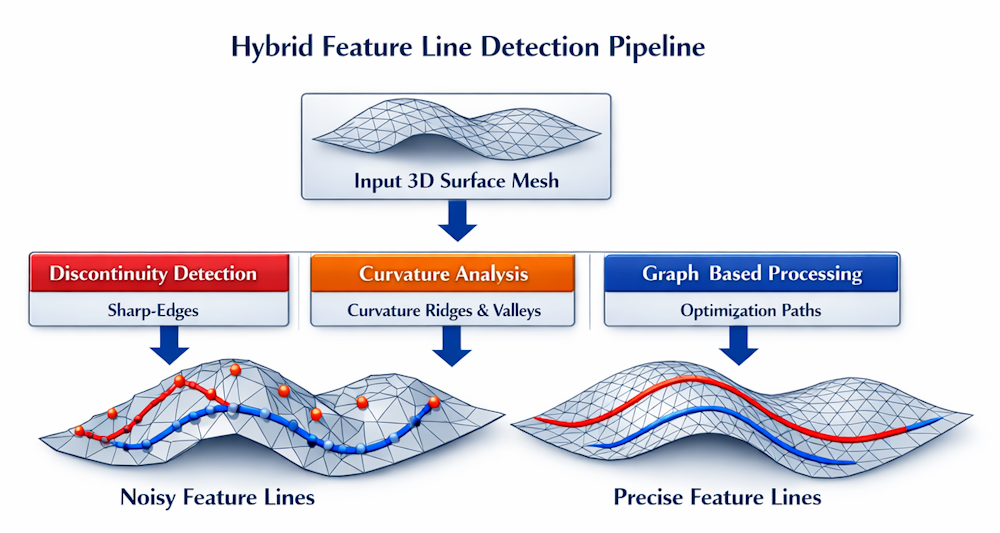
Feature lines are essential structural indicators that define surface organization. These lines mark abrupt transitions, highlight curvature patterns, and expose the underlying framework guiding segmentation and meshing protocols. For CAE engineers, feature lines inform element alignment, delineate requisite refinement zones, and determine boundary layer conformity to geometric attributes. For software engineers developing meshing solutions, feature lines enable the conversion of raw surface data into algorithms that consistently generate stable, high-quality meshes.
Failure to identify feature lines accurately can lead to unpredictable meshing results, including misplaced refinements, inappropriate segmentation, and solver inefficiencies stemming from distorted or misaligned elements. Thus, feature line detection is paramount in preparing surfaces for mesh generation.
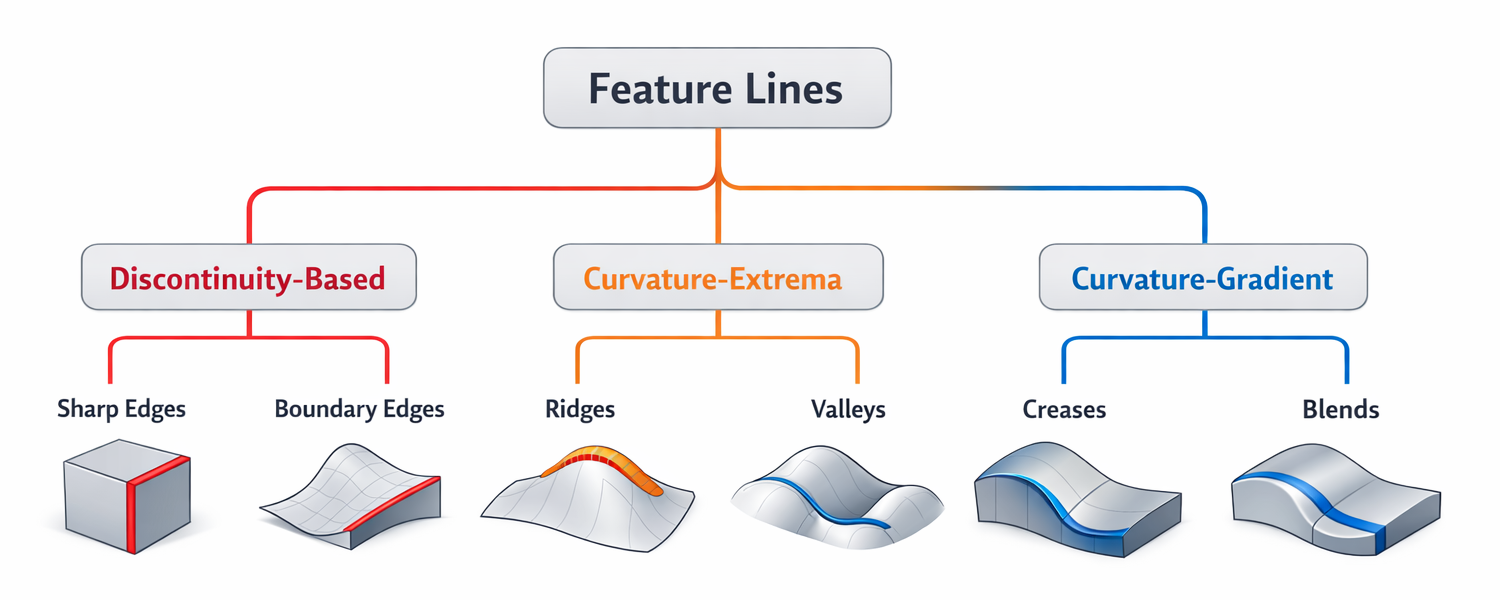
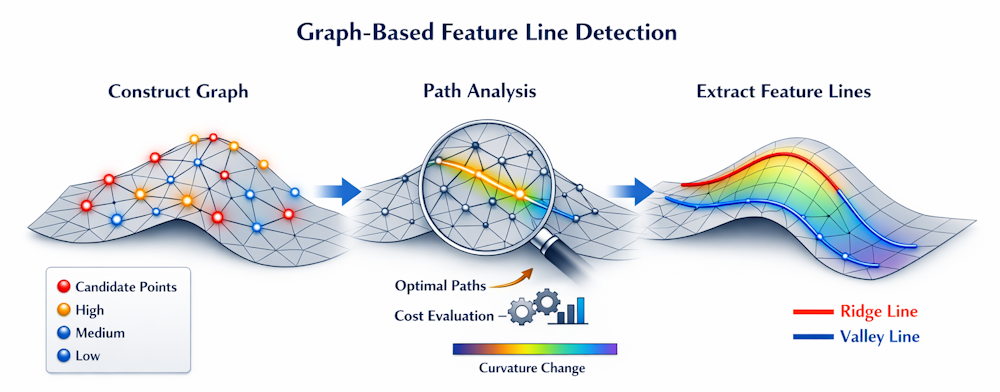
This guide outlines classifications of feature lines, their geometric basis, principal detection methodologies, and their influence on meshing workflows. It serves CAE professionals and software developers seeking a concise yet thorough understanding of feature lines and their role in robust preprocessing and mesh creation.